
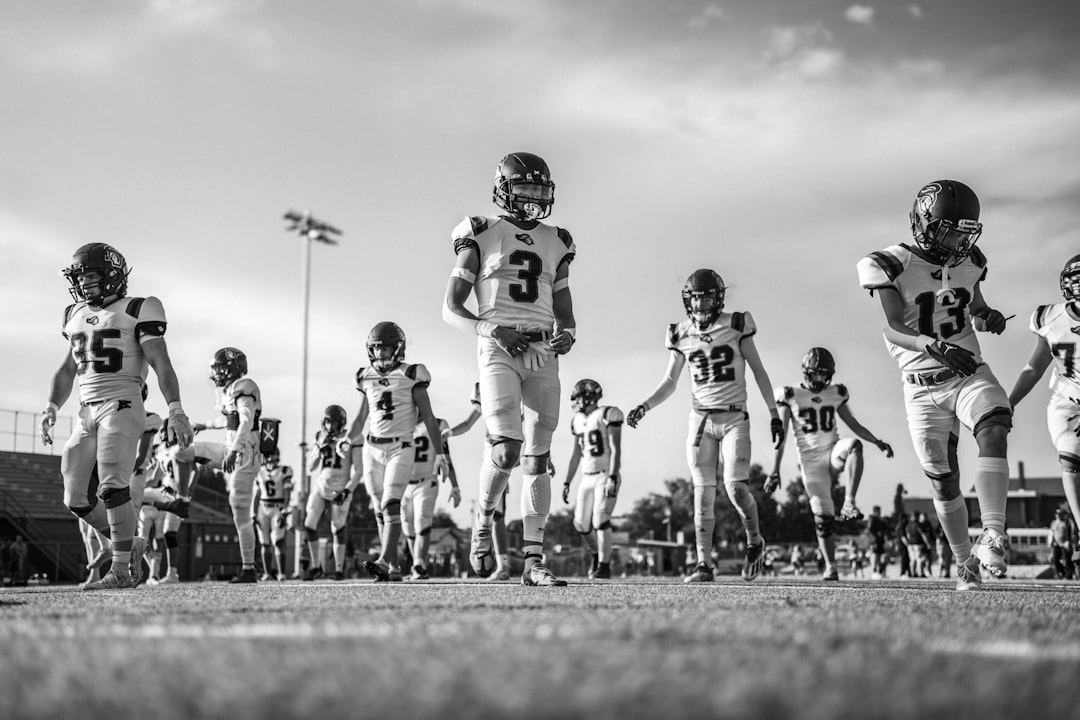
Talent can open a door, but it rarely carries a young athlete all the way through it. The athletes who keep progressing, especially as competition intensifies, are usually the ones who learn how to train with purpose. That is where athlete performance training becomes so important. When done well, it does more than improve speed, strength, or endurance. It teaches young competitors how to move efficiently, recover intelligently, respond to pressure, and develop the discipline that separates raw potential from lasting achievement. Stadium Performance stands out because it approaches development as a complete process rather than a quick fix.
Why athlete performance training matters early
Young athletes are often eager to play more games, join more teams, and compete more often. While game experience has value, competition alone does not build a complete athlete. Without focused training, many young players repeat the same movement flaws, overuse the same muscle groups, and rely too heavily on natural ability. That can slow development and increase the chance of setbacks just when performance should be taking off.
Effective athlete performance training gives structure to growth. It helps young athletes build a stronger foundation in balance, coordination, mobility, power, and body control. Those qualities matter across nearly every sport. A soccer player needs acceleration and deceleration. A basketball player needs lateral movement and vertical power. A baseball player needs rotational strength and stability. A swimmer needs efficient mechanics and controlled force production. In every case, better movement underlies better performance.
Just as important, early training teaches athletes how to respect the process. They begin to understand that improvement is earned through repetition, consistency, and attention to detail. That lesson often becomes one of the greatest competitive advantages they carry into high school, college, and beyond.
What separates real development from ordinary workouts
Not every workout qualifies as meaningful athlete performance training. Young athletes do not need random fatigue or one-size-fits-all drills. They need a program that reflects their age, sport demands, training history, strengths, and limitations. The best environments focus on progression, not punishment.
At its highest level, performance training is built around a few essential principles:
- Movement quality first: Before an athlete can express power, they need stable, efficient mechanics.
- Progressive overload: Training should become more demanding over time in a measured, safe way.
- Sport relevance: Drills should support the movement patterns and energy systems most useful in competition.
- Recovery and resilience: Sleep, mobility, nutrition, and workload management all influence progress.
- Individualization: Athletes of the same age can have very different physical and developmental needs.
For families looking for athlete performance training, Stadium Performance brings these principles together in a way that feels serious without becoming overwhelming. That balance matters. Young athletes need challenge, but they also need coaching that supports confidence and long-term growth.
The difference is easy to see over time. In a generic setting, an athlete may get tired and feel productive. In a strong performance setting, the athlete becomes measurably better: quicker off the line, more stable on landings, stronger through contact, and more consistent late in competition.
The physical qualities that turn promise into performance
Championship-level athletes are rarely defined by one standout trait alone. They usually possess a combination of physical tools that work together under pressure. Athlete performance training helps build those tools in an integrated way.
| Performance Quality | Why It Matters | How It Shows Up in Competition |
|---|---|---|
| Strength | Supports force production, stability, and durability | Winning physical battles, holding position, maintaining mechanics |
| Speed | Improves first-step quickness and top-end movement | Creating separation, closing space, reacting faster |
| Agility | Develops change of direction and body control | Cutting, defending, recovering, moving efficiently in tight space |
| Power | Transfers strength into explosive action | Jumping, sprinting, striking, throwing, accelerating |
| Mobility and stability | Allows efficient movement while protecting joints | Cleaner technique, better range, fewer compensations |
| Conditioning | Supports repeat effort and late-game execution | Maintaining pace, decision-making, and form under fatigue |
When these qualities are developed together, the athlete starts to look different. Movement appears cleaner. Reactions become sharper. Fatigue sets in later. Confidence grows because the athlete can feel that their body is more prepared for the demands of the game.
This is especially important during growth phases. Young athletes often experience sudden changes in height, coordination, and strength. A thoughtful training program helps them adapt rather than struggle through that transition. It gives them the tools to stay connected to their mechanics while their body changes.
The coaching environment behind championship habits
Physical preparation is only part of the equation. Young athletes also need an environment that teaches maturity, accountability, and competitive composure. Great coaches do more than count reps. They build habits that carry into practice, school, and competition.
A strong training culture usually emphasizes a few things consistently. Athletes are expected to show up on time, listen closely, move with intent, and finish sessions with the same focus they had at the start. Corrections are specific. Standards are clear. Progress is tracked, even when it comes in small increments. Over time, athletes internalize those expectations and begin to coach themselves more effectively.
This kind of environment also helps young athletes handle adversity. Not every season goes smoothly. Playing time changes, confidence fluctuates, and injuries or setbacks can interrupt momentum. A serious performance setting gives athletes a productive response: return to fundamentals, stay consistent, and keep building. That mindset often defines the athletes who eventually break through.
Parents should pay attention to this cultural side of training. The right program should feel demanding, but it should also feel developmental. Young athletes thrive when they are challenged with care, taught with clarity, and surrounded by coaches who understand both performance and progression.
A practical path for parents and young athletes
Families do not need to chase every trend to support athletic growth. In most cases, the smartest path is also the most sustainable one: start with fundamentals, train consistently, and build over time. A simple framework can help.
- Assess the athlete honestly. Identify current strengths, weaknesses, injury history, and sport demands.
- Prioritize movement quality. Mechanics in sprinting, landing, squatting, rotating, and decelerating should come before heavy intensity.
- Train across seasons. Off-season, pre-season, and in-season work should each have a purpose.
- Support recovery. Sleep, hydration, nutrition, and mobility are not optional extras.
- Measure progress. Look beyond game stats to improvements in strength, speed, control, and confidence.
It also helps to avoid a few common mistakes:
- Specializing too early without building all-around athleticism
- Confusing exhaustion with improvement
- Ignoring technique in pursuit of intensity
- Adding too much volume without adequate recovery
- Expecting instant results from a long-term process
When families commit to a smarter approach, the benefits go far beyond the scoreboard. Young athletes learn how to prepare, how to respond to challenge, and how to trust the work they have put in. Those are the habits that create durable confidence.
Conclusion: where champions are really made
Champions are not shaped by talent alone, and they are not made in a single season. They are built gradually through coaching, structure, discipline, and the daily practice of doing the right things well. Athlete performance training creates the bridge between potential and performance by strengthening the body, sharpening movement, and reinforcing the mindset required for sustained success.
That is why the work done at Stadium Performance matters. It is not just about producing harder workouts. It is about guiding young athletes through a smarter developmental path, one that helps them become stronger competitors and more resilient individuals. For parents and athletes who want more than short-term results, that kind of training is often the difference between simply playing a sport and truly growing into a champion.
To learn more, visit us on:
Athlete Performance Training | Stadium Performance
https://www.stadiumperformance.com/
Stadium Performance specializes in athlete development, injury prevention, and performance training for all athletes. Athlete Performance Training
